“For you created my inmost being; you knit me together in my mother’s womb. I praise you because I am fearfully and wonderfully made; your works are wonderful, I know that full well.” Psalm 139:13-14 NIV
Did you know? The Lord appeared to Abram and said, … “I will establish my covenant as an everlasting covenant between me and you and your descendants after you…” Genesis 17:7 (emphasis mine)
“When Moses finished reciting all these words to all Israel, he said to them, “Take to heart all the words I have solemnly declared to you this day, so that you may command your children to obey carefully all the words of this law. They are not just idle words for you—they are your life.” Deuteronomy 32:45-47 NIV
As I read my Bible this morning, these words stood out to me. I started to think about when my children were young. Although we prayed together at night, I don’t think I took it upon myself to teach them about God’s Word. Oh sure, they were in church every time the doors were open. But is that really enough?
Do we delegate the teaching of our children to others? Do we depend on the youth pastor or children’s minister too much? All of my children are Christians. For that I give glory to God. I know I didn’t do everything right. I made many mistakes.
I believe the verses above are speaking to mothers and fathers. Talk to your children about God. Teach them to read and study their Bible. (I don’t mean books about the Bible.) Teach them that the answers to life’s problems are found in God’s Word.
Did you know? The Lord appeared to Abram and said, … “I will establish my covenant as an everlasting covenant between me and you and your descendants after you…” Genesis 17:7 (emphasis mine)
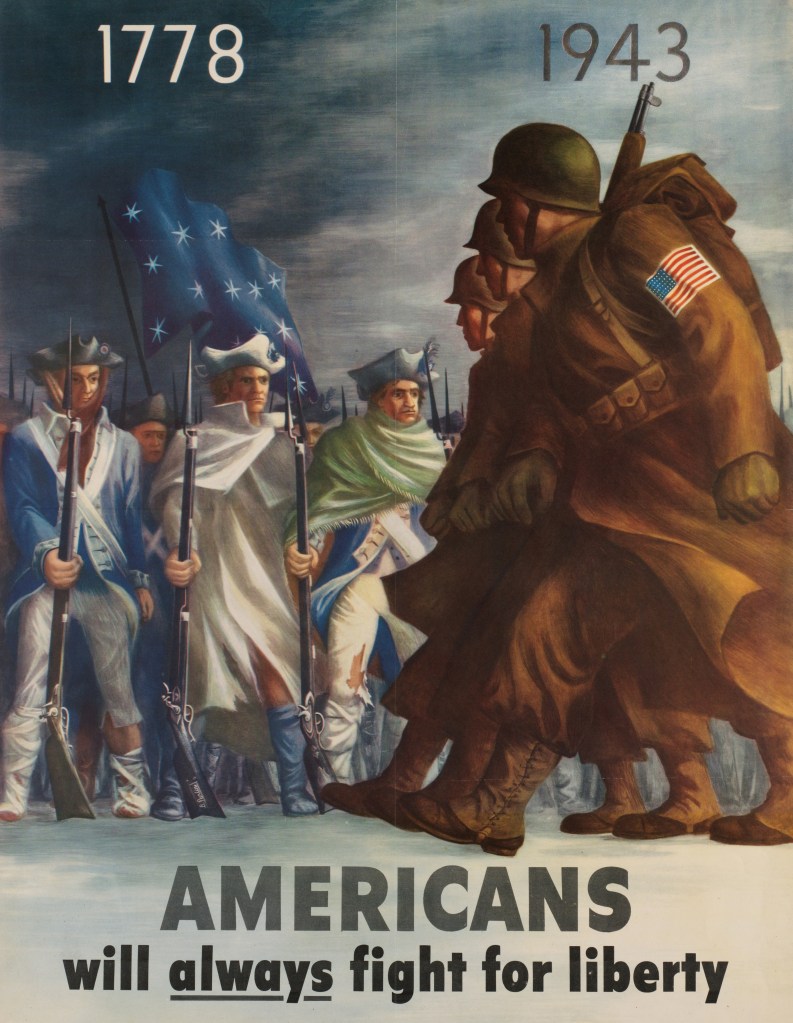
The only hope for America is that she will seek Truth and love it. Jesus is the Truth. His Word is Truth. Therefore, we have access to Truth.
The devil is the prince of this world and the father of lies. His goal is to deceive and destroy.
Jesus said, “You belong to your father, the devil, and you want to carry out your father’s desires. He was a murderer from the beginning, not holding to the truth, for there is no truth in him. When he lies, he speaks his native language, for he is a liar and the father of lies.” John 8:44 NIV
The tolerance of Satan’s lies has had severe consequences:
Anti-semitism is at an all-time high.
Terrorism is cheered while the innocent are hated (U.S. college campuses).
Transgender surgery on children is promoted and protected by law.
Homosexuality is considered a normal lifestyle.
Over 1 million babies are murdered every year by abortion.
Freedom of speech, our First Amendment right, is being taken away by anyone who disagrees by labeling it “misinformation” or hate-speech”.
America, once a Christian nation, has become anti-God. (Just ask any Christian over 70 years old. They have seen this happen right before their eyes.)
PRAY FOR AMERICA!
The Bible says, “I urge, then, first of all, that petitions, prayers, intercession and thanksgiving be made for all people— for kings and all those in authority, that we may live peaceful and quiet lives in all godliness and holiness. This is good, and pleases God our Savior, who wants all people to be saved and to come to a knowledge of the truth.” 1 Timothy 2: 1-4 NIV
I urge all Americans to prayerfully consider the choices before us in this election. Vote for the agenda you want to see carried out. They are very different.
“The king’s heart is like channels of water in the hand of the Lord; He turns it wherever He pleases.” Proverbs 21:1 NASB
Many died to give us freedom and the right to vote. Don’t toss it aside.
“For to be free is not merely to cast off one’s chains, but to live in a way that respects and enhances the freedom of others.” Nelson Mandela
Did you know? The Lord appeared to Abram and said, … “I will establish my covenant as an everlasting covenant between me and you and your descendants after you…” Genesis 17:7 (emphasis mine)
Did you know? The Lord appeared to Abram and said, … “I will establish my covenant as an everlasting covenant between me and you and your descendants after you…” Genesis 17:7 (emphasis mine)
In his letter to the Galatians, Paul talked about a different gospel. He said,
“I am astonished that you are so quickly deserting the one who called you to live in the grace of Christ and are turning to a different gospel.” Galatians 1:6
Is there a “different Gospel” invading today’s Church? I believe there are many. Today, let’s talk about what some call “Easy Christianity”.
“The concept of Easy Christianity is not new, and as it is with most false doctrines, it takes Scripture out of context and ignores much of what the Bible says.”
It highlights that we are saved by faith, not works, and basically ignores teaching anything that might discourage potential church members from joining the church. And yes, we must not think we are saved by our works! We could never earn our salvation! At the same time, we must not ignore the following verses from the Word of God, which are just as important.
“Repent, then, and turn to God, so that your sins may be wiped out, that times of refreshing may come from the Lord and that he may send the Messiah, who has been appointed for you—even Jesus.” Acts 3:19
“Then he (Jesus) said to them all: “Whoever wants to be my disciple must deny themselves and take up their cross daily and follow me. For whoever wants to save their life will lose it, but whoever loses their life for me will save it. What good is it for someone to gain the whole world, and yet lose or forfeit their very self? Whoever is ashamed of me and my words, the Son of Man will be ashamed of them when he comes in his glory and in the glory of the Father and of the holy angels.” Luke 9:23-26
Jesus said, “Enter through the narrow gate. For wide is the gate and broad is the road that leads to destruction, and many enter through it. But small is the gate and narrow the road that leads to life, and only a few find it.” Matthew 7:13-14
He said to them, “Make every effort to enter through the narrow door, because many, I tell you, will try to enter and will not be able to. Once the owner of the house gets up and closes the door, you will stand outside knocking and pleading, ‘Sir, open the door for us.’
“But he will answer, ‘I don’t know you or where you come from.’” Luke 13:23-25
The Bible warns us about many things. Turning to a different gospel is one of them!
Did you know? The Lord appeared to Abram and said, … “I will establish my covenant as an everlasting covenant between me and you and your descendants after you…” Genesis 17:7 (emphasis mine)
The Lord appeared to Abram and said, … “I will establish my covenant as an everlasting covenant between me and you and your descendants after you…” Genesis 17:7 (emphasis mine)
Magic: the power of apparently influencing the course of events by using mysterious or supernatural forces
Is magic real, or is magic just an illusion? Are there people who really call upon demonic forces to experience the supernatural?
God warns his people not to participate in such things, yet I fear that many Christians are unaware of the danger they put themselves in when they seek the supernatural.
Have you ever gone to a fortune-teller for fun? Have you read your horoscope and said, “That is so true!” Have you ever participated in a séance or played with a Ouija board?
You may be thinking, “There’s nothing wrong with a little fun. It’s no big deal.” But do you know what God’s word says about this?
Proverbs 14:12 says, “There is a way that appears to be right, but in the end it leads to death.”
What does that mean? It means you can do something you think is innocent even though it is very dangerous.
Deuteronomy 18:10-12 says: “Let no one be found among you who sacrifices their son or daughter in the fire, who practices divination or sorcery, interprets omens, engages in witchcraft,or casts spells, or who is a medium or spiritist or who consults the dead. Anyone who does these things is detestable to the Lord;”
That is as clear as glass, but I wonder how many Christians know these verses. Fortunetelling is the art of forecasting the future, supposedly by supernatural means, and is an ancient practice, still popular today.
Fortunetelling is also known as divination. Fortune-tellers include anyone who claims to predict your future or advise your life through such means as Ouija boards, crystal balls, horoscopes, astrology, palm-reading, tarot cards, etc.
These practices take place today, just as they did long ago. Participating in these practices can bring you a lot of trouble. I know a person whose 16-year-old daughter was so filled with fear that she would not sleep in her own room. She said she saw ghosts. What did she do to open this door? I don’t know what she did, but I believe that someone did something that welcomed evil spirits into the home, probably an occult activity.
The Bible has plenty to say about witchcraft, sorcery, and divination. The Scripture I have shown you is just the tip of the iceberg. I urge you to study this for yourself. It is so important to be knowledgeable about God’s word in this day and time. We are living in a time when the world is fascinated with the supernatural. Therefore, these practices will become normalized in society. In fact, they already are.
“Once when we were going to the place of prayer, we were met by a female slave who had a spirit by which she predicted the future. She earned a great deal of money for her owners by fortune-telling. She followed Paul and the rest of us, shouting, “These men are servants of the Most High God, who are telling you the way to be saved.” She kept this up for many days. Finally Paul became so annoyed that he turned around and said to the spirit, “In the name of Jesus Christ I command you to come out of her!” At that moment the spirit left her.” Acts 16:16-18 NIV
All believers must discern for themselves what is right and true. Discernment comes from knowing God’s word, loving the truth, and protecting your heart.
“Keep and guard your heart with all vigilance and above all that you guard, for out of it flow the springs of life.” Proverbs 4:23 AMP
“Your statutes are my delight; they are my counselors.” Psalm 119:24 NIV
“If your law had not been my delight, I would have perished in my affliction. Psalm 119:92 NIV
“All your words are true. All your righteous laws are eternal.” Psalm 119:160
“Great peace have they who love your law, and nothing can make them stumble.” Psalm 119:165
The Lord appeared to Abram and said, … “I will establish my covenant as an everlasting covenant between me and you and your descendants after you…” Genesis 17:7 (emphasis mine)
“The Lord is a refuge for the oppressed, a stronghold in times of trouble. Those who know your name trust in you, for you, Lord, have never forsaken those who seek you.” Psalm 9:9-10 NIV
Did you know? The Lord appeared to Abram and said, … “I will establish my covenant as an everlasting covenant between me and you and your descendants after you…” Genesis 17:7 (emphasis mine)
One day recently, depression hit me hard. It was the kind of depression that was almost overwhelming. Was it a spiritual attack? I think it was. But the Holy Spirit reminded me of King David’s prayer when he was discouraged and depressed.
“But thou, O Lord, art a shield for me; my glory, and the lifter up of mine head.” Psalm 3:3 KJV Read full chapter
King David’s prideful son, Absalom, exalted himself before the people of Israel and proclaimed himself king. King David and his officials were forced to flee for their lives. (2 Samuel 15-17)
David loved his son, Absalom. Can you imagine how depressing that would be? David looked to the Lord, the lifter of his head, and God strengthened him. He will do the same for you and for me.
Did you know? The Lord appeared to Abram and said, … “I will establish my covenant as an everlasting covenant between me and you and your descendants after you…” Genesis 17:7 (emphasis mine)
In September, I wrote the post, “What Does It Mean to Forsake Your First Love?” I have continued to contemplate this question. Perhaps today’s post will give us greater insight into what our first love looked like.
“Yet I hold this against you: You have forsaken the love you had at first.” Revelation 2:4 NIV
Of the 2,565 posts I have written so far, this one, first posted in 2021, is my favorite:
Easter reminds me that because Jesus paid the penalty for my sins, I am free from guilt and shame. Have you ever felt such deep guilt that you couldn’t get over it? Most people probably haven’t done anything terrible enough to bring on that kind of deep shame.
For those of us who have been forgiven much, love for Jesus runs very deep because it changes our life in an indescribable way. It can’t be explained to someone who hasn’t experienced it. Maybe you could imagine what it would be like when you hear the hymn, Amazing Grace, written by John Newton, a slave ship captain who experienced God’s merciful forgiveness.
Another example is a woman known only as “The Sinful Woman” found in Luke 7:36-50.
This woman came to see Jesus while he dined with some religious leaders. The passage only tells us the bare bones of the story, but we can imagine what might have taken place. I have often wondered, what she was doing at the party!?
“But it was acceptable in Jesus’ day for people to come to a party to watch and listen to the conversation. They were not allowed to eat, but they could observe.” (Never Thirsty Ministry)
She was there to see and hear Jesus.
I have no idea what Jesus and the Pharisees talked about. Maybe Jesus talked about the forgiveness of sins. Perhaps, as she listened, she believed He was the Messiah and experienced the joy of receiving forgiveness.
Maybe Jesus quoted Old Testament Scriptures such as Isaiah 1:18:
“Though your sins are like scarlet, they shall be as white as snow; though they are red as crimson, they shall be like wool.”
Maybe He quoted Psalm 103:12:
“… as far as the east is from the west, so far has he removed our transgressions from us.”
And maybe, He looked right in her eyes as he did, not at the Pharisees, but only at her, and maybe that is why she cried so hard that she could actually wash His feet with her tears.
Verse 44 tells us that Jesus turned toward the woman and said to Simon,
“… her many sins have been forgiven—as her great love has shown. But whoever has been forgiven little loves little.”
Imagine how she felt, knowing He was talking about her.
She probably thought no one would pay any attention to her that evening. But Jesus looked right at her and spoke the words she longed to hear:
“Her many sins have been forgiven.”
Easter means forgiveness and cleansing to me. Anyone carrying guilt can be free from that heavy load, just like I was and just like slave ship Captain John Newton. Receive God’s gift of salvation by trusting in His son, Jesus, and giving your life to Him.
“But he was wounded for our transgressions, he was bruised for our iniquities: the chastisement of our peace was upon him; and with his stripes we are healed. All we like sheep have gone astray; we have turned every one to his own way; and the Lord hath laid on him the iniquity of us all.” Isaiah 53:5-8 KJV
Please watch this fascinating story about the song Amazing Grace.
Did you know? The Lord appeared to Abram and said, … “I will establish my covenant as an everlasting covenant between me and you and your descendants after you…” Genesis 17:7 (emphasis mine)